Working with Traditional Timber Frames: A Guide for Modern Builders
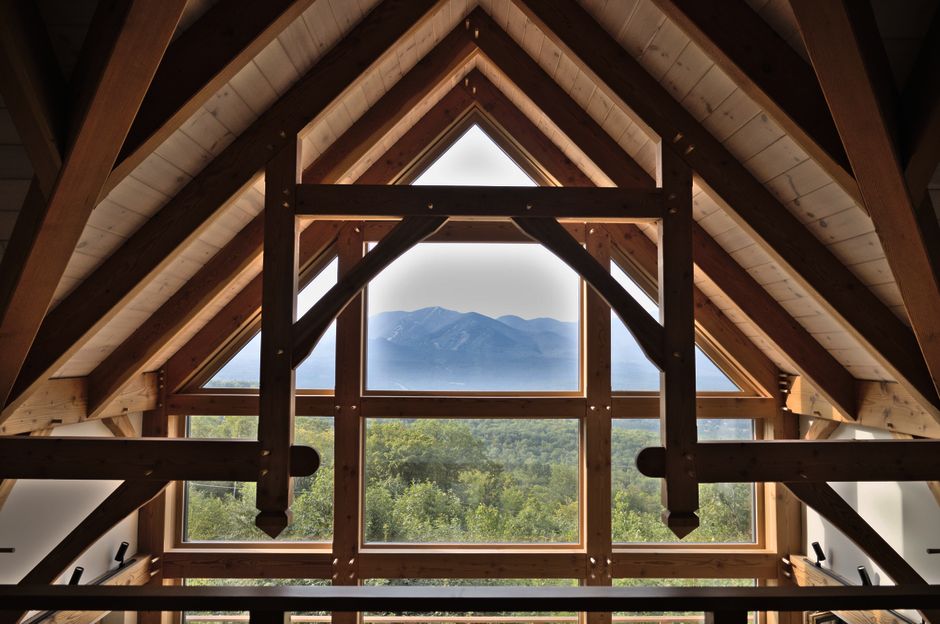
Traditional timber-framed buildings are among the most beautiful and long-lived structures in the British countryside. From medieval hall houses to eighteenth-century barns, they have survived for centuries because their construction was well understood by the people who built them. What is less well understood today is how to repair them, and how to extend them without undermining the very qualities that make them special. Modern construction techniques and materials are not always compatible with a frame that was cut and assembled by hand several hundred years ago.
The first thing to appreciate about a traditional timber frame is that it is a living structure. Oak moves as it gains and loses moisture, and a frame that has been standing for centuries has settled into a shape that suits its position. Joints that were once tight may have opened. Timbers may have twisted. None of this is necessarily a problem, and a good frame surveyor will distinguish between movement that is stable and movement that indicates a real structural issue. The temptation to straighten everything and make it all plumb should be resisted. A frame that has survived this long has earned the right to be a little out of true.
Repairing Rather Than Replacing
When timbers are decayed or damaged, the instinct of many modern builders is to cut them out and replace them. In many cases, a better approach is to repair them in situ. A rotten end to a beam can often be cut back to sound timber and a new piece scarfed in, using a traditional joint and oak pegs or stainless steel fixings. This preserves the original timber, maintains the historic character of the frame, and is often stronger than a full replacement because the new piece is joined into the existing grain and load path.
Where a timber is beyond saving, replacement should match the original as closely as possible in species, section, and grain direction. Green oak is the traditional choice, but it will shrink and move as it dries, so allowance must be made for that. Air-dried oak is more stable but harder to source and more expensive. Whatever is used, the new timber should be detailed so that it can be distinguished from the original on close inspection, a principle that conservation professionals call legibility.
Joints deserve particular attention. Traditional timber frames rely on a combination of pegged mortise and tenon joints, scarf joints, and various forms of bracing. These joints are designed to move slightly and to distribute loads in specific ways. Replacing them with modern steel connectors may seem stronger, but it can introduce stiffness where flexibility is needed, causing stress to concentrate elsewhere. A carpenter or engineer with experience of historic frames is worth every penny.
Extending and Adapting
Many owners of timber-framed buildings want to extend them, whether to add a kitchen, a bathroom, or more living space. Extensions can work well, but they need to be designed with the frame in mind. The new structure should generally be self-supporting, so that it does not impose loads on the historic frame that it was never designed to carry. Where the two connect, the junction should allow for movement and should not trap moisture against the old timbers.
Materials matter here too. Modern cement-based renders and plasters, plastic membranes, and impermeable paints can all cause problems when applied to a timber frame. The frame needs to breathe, and so do the infill panels between the timbers. Lime plaster, breathable insulation, and traditional finishes are usually the right choice, even if they cost more and take longer to apply. The result is a building that continues to perform as it was designed to, rather than one that fights its own construction.
Working with traditional timber frames is not about nostalgia. It is about understanding a technology that was refined over centuries and that still works remarkably well when it is respected. Builders who take the time to learn its principles find that it rewards them with buildings that are a pleasure to work on and that will still be standing long after the modern structures around them have been replaced.